Billet Cut & Heat
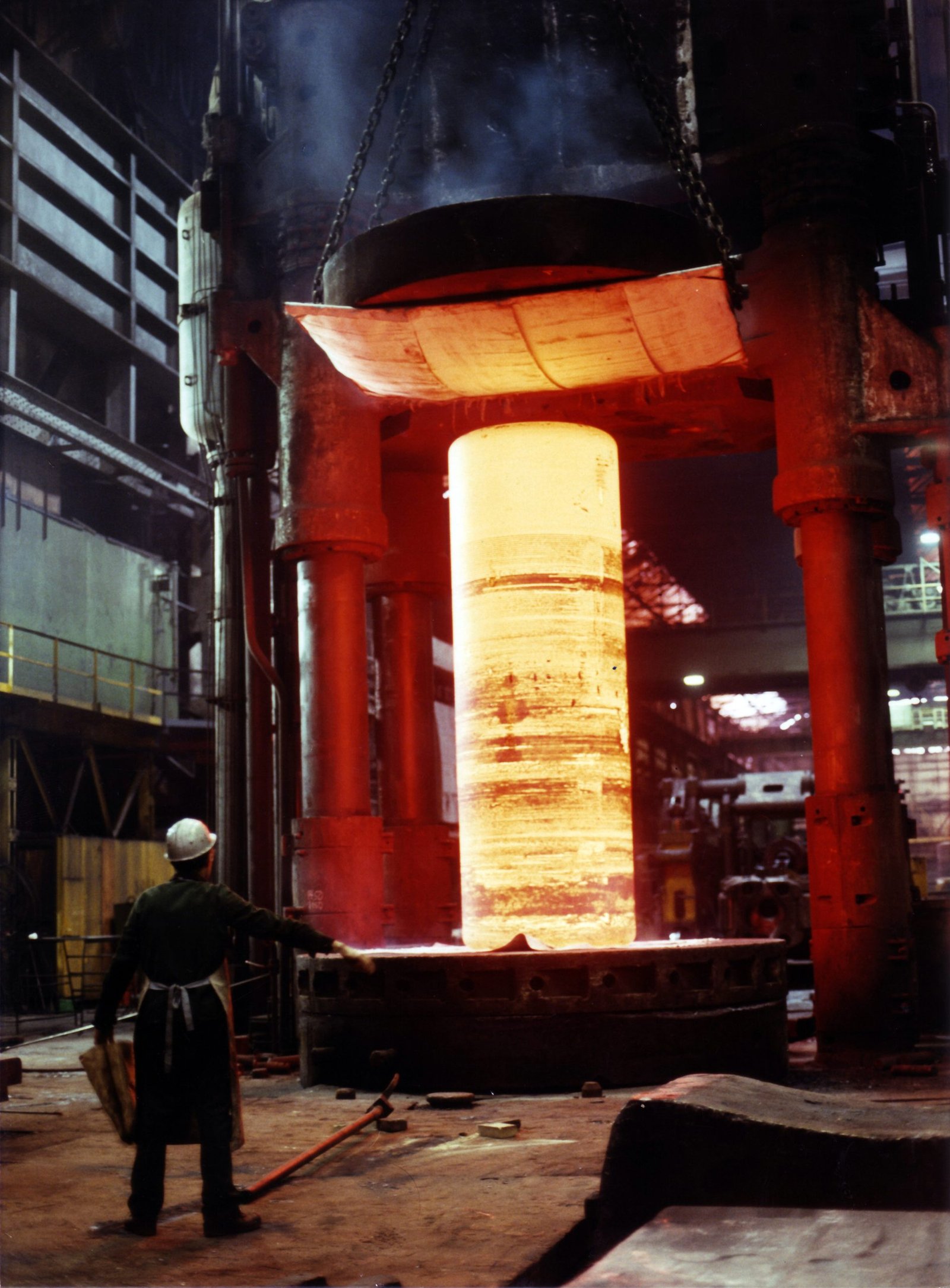
Steel billets are cut to size and heated to forging temperature
From automotive crankshafts and connecting rods to high-precision cold-forged fasteners — strong, near-net-shape forgings sourced from India's established forging clusters, for OEMs across the USA, Canada, Europe, UAE and Australia.
India has a well-established forging industry, with capabilities spanning small precision components to large structural forgings, supported by clusters in Rajkot, Ludhiana, Pune, Faridabad, and coimbatore. Indian forgings are widely recognised in global markets — particularly automotive forgings such as crankshafts, connecting rods, axles, and steering knuckles. Hot forging dominates volume production, while cold forging is increasingly used for high-precision fasteners and small components with tighter tolerances and a better surface finish.
Magnus matches each part to the forge best suited to its size, material, and process — then manages sampling and shipping.
| Specification | Detail |
|---|---|
| Forging processes | Closed die, open die, upset, hydraulic press, screw press, hot, cold |
| Materials | Carbon steel (EN8, EN9, EN24), alloy steel (EN19, EN36), stainless steel, aluminium alloys |
| Part range | Small precision components to large structural forgings |
| Heat treatment | Normalising, annealing, hardening & tempering, as required |
| Materials | Carbon (1045, EN8), Alloy (4140/EN19, 4340/EN24, 8620), Stainless (304, 316, 410, 17-4PH), Aluminum (6061, 7075), Brass |
| Tolerance | ±0.5mm to ±0.15mm |
| Typical parts | Flanges, nozzles, forged fittings, pressure-vessel connections, shafts and crankshafts, gears and gear blanks, valve components, and custom forged parts for oil & gas, power, and heavy engineering. |
| Quality & Lab | CMM, tensile testing, ultrasonic (UT), magnetic particle inspection (MPI), hardness testing, spectrometer, roundness and contour measurement. |
| Export markets | USA, UK, Europe, Australia, Canada,UAE |
Steel billets are cut to size and heated to forging temperature
The heated billet is rough-shaped to distribute the material.
The pre-form is pressed closer to the final shape in blocking dies.
The part is forged to its final shape in finishing dies.
Excess flash is trimmed away from the forged part.
The part is heat-treated for strength, then inspected before dispatch.
Closed-die forging shapes metal between two dies for high-volume, near-net-shape parts such as crankshafts and gears. Open-die forging works larger, simpler shapes — pump shafts, press frames, and wear parts — without enclosed dies.
Yes. Forgings can be heat-treated and machined to final specification, so parts arrive ready to use.
Carbon steel (EN8, EN9, EN24), alloy steel (EN19, EN36), stainless steel, and aluminium alloys.
Forgings are exported to the USA, UK, Germany, Australia, and Canada — across automotive, railway, oil & gas, mining, agriculture, and general engineering.